Route 35
The Dark HalfRoute 35 is the road beside which Homer Gamache is found dead, and the first major landscape of the investigation into his killing. Running past farms and Homeland Cemetery, it connects an ordinary rural setting—roadside produce stands, late-night television, and a walk home from fishing—to the uncertain movements of a stranger and the discovery of a body.
Setting and Initial Discovery
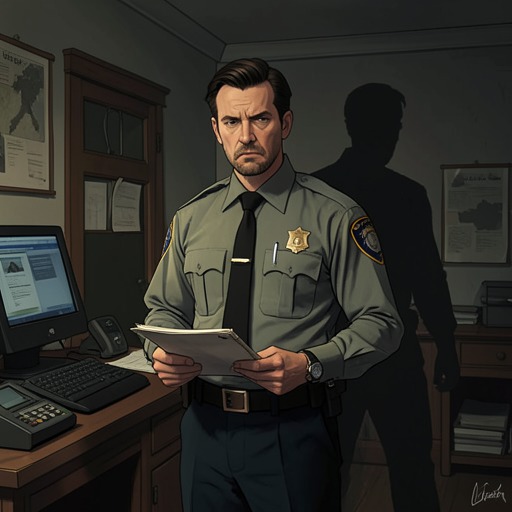
Alan Pangborn examines Homer’s battered body in a ditch beside Route 35 and reflects that Castle Rock’s run of bad luck has not ended with the death of the former sheriff, George Bannerman. The road turns the crime into a physical fact at the edge of everyday life: Homer is not simply missing or rumored to be injured; he has been found beside a route people use to get home.
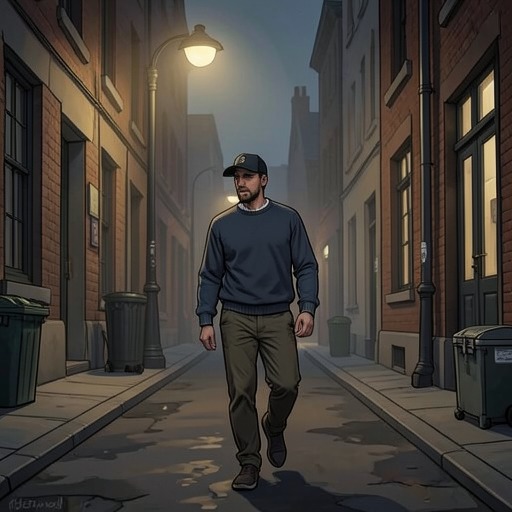
The road also gives the investigation its first local witnesses. Norris Ridgewick stops at the Arsenault farm, about a mile south of Homeland Cemetery, for information about the family’s roadside produce stand. He asks whether anyone saw Homer’s truck the previous night. Dolly Arsenault recalls seeing a man on the far side of Route 35 while she was watching television, around twelve-thirty or twelve-forty. Her account is uncertain about which direction he came from and whether he meant to cross, but she remembers him looking toward her lighted window before hitching a ride from an approaching car.
The Road as an Investigative Link
The account acquires urgency because Homer’s home is less than three miles from the Arsenault farm. If he had taken the logical route back from South Paris the night before, he would have passed the farm; Norris reasons that the Arsenaults would probably have seen him if he had, since he should then have reached home shortly afterward. The geography does not settle what happened, but it gives the sheriff’s office a route against which to test the witness’s recollection.
Before Pangborn can reach Norris, the meeting point shifts. A boy walking home from early fishing at Strimmer’s Brook finds a pair of legs in the high weeds on Route 35 and alerts his mother, who calls the sheriff’s office. The location and the manner of the discovery confirm that the investigation has moved from a question about Homer’s route to a death scene. Pangborn’s recognition of the likely victim is conveyed indirectly through the upset tone of the dispatcher’s message; protocol keeps names off the police radio.
Crime-Fiction Echoes
Route 35’s role resonates with the crime fiction associated with George Stark. Stark’s novels draw on hard-boiled conventions of robbery, violent action, and a protagonist who pursues a single goal with mechanical persistence. Dodie Eberhart, a devoted reader of the books, recognizes Stark as the strongest writer in that crime-fiction tradition. The novels’ style forms part of the larger setting in which a fictional criminal identity and real violence become difficult to separate.
That overlap also shapes the investigation’s interpretation of evidence. In explaining the apparent case against himself, Thad Beaumont lays out an elaborate hypothetical involving an identical twin: one twin would remain in Castle Rock and murder Homer, while the other used Homer’s truck, changed cars, traveled to Washington, D.C., killed Frederick Clawson, and returned to Ludlow. Thad’s account is a sarcastic reconstruction of the scenario he imagines Pangborn might have suspected, not a factual explanation of the crimes. It shows how the murder beside Route 35 becomes one element in a larger, almost mechanically plotted chain of movements.
The road therefore serves both as a concrete setting for the case and as a point of contact between the police inquiry and the book’s crime-story logic. Its ordinary details—farm, cemetery, ditch, weeds, and passing traffic—provide the clues and distances by which investigators reconstruct events, while leaving the stranger’s movements and the full meaning of the violence unresolved.